Mar 16, 2012

Cascais

Cascais is a town located to the west of Lisbon, along the coast. It's about a 45 minute commuter train ride away, and by the time you get out there you're no longer seeing the Tagus river - it's all Atlantic Ocean. Cascais and Estoril (next door just to the east of Cascais) are known as beach towns, but also for hosting the homes of Lisbon's wealthiest citizens (and the resorts of Portugal's wealthiest tourists). The center of town itself doesn't really give you that feeling, but it's in the details. The restaurants are all pricy, the cars are all very expensive, most people walking around are dressed nattily, etc. Amidst all this, Cascais still hosts a small fishing fleet, who's harbor is around the corner from a large, fancy marina.

Here's one of the trains one takes to get to Cascais. They leave from Cais do Sodre station, which is a short walk from our apartment.

The actual beaches within Cascais are pretty small. The really nice beaches are outside of town, and you pretty much need a car or bicycle to get to them. This shows Praia Pescadores, the busiest beach within Cascais, as it is the most centrally located.

This beach is known as "Praia Pescadores" (which translates to Fishermen's Beach) because it hosts the small-time fishing industry. Following along to the left, past the palm trees there is a former fort which has been turned into a luxury hotel & conference center, and past that is the marina (you can barely see the masts of the sail boats).


Here's a view back into town from the vantage point of those homes we were looking at in the previous two pictures. This statue is Cascais' version of the Monument to the Discoveries, which commemorates Portugal's early sea-faring heritage.

Here's a more unimpeded view.

Along the street up the hill were several nice, big houses looking out at the beach. I though this one was very unique and beautiful, so I took its picture.

As you go past the previously pictured fort and marina, you follow along the water westward towards the coast where it turns north-south. Near that corner is the "Boca do Inferno", which translates to Mouth of Hell. It's an area where the shore is made of jagged and uneven rocks. Because of this and the strength of the tides, it's known for having spectacular waves that crash into the rocks and create huge sprays and echoing booms. Along the way you pass an estate that belonged to the Condes Castro Guimarães, a line of Counts (Condes). The land and mansion have since been returned to the state (I don't know if the transer was voluntary or coerced) and made into a museum and public park.

Here's a funky little restaurant hanging on the rocks, followed by the Santa Marta lighthouse, which doesn't really function anymore and is now surrounded by, what else, a luxury hotel.


Here are a variety of pictures of the Boca do Inferno area. There were some brave souls out along the edge fishing. I wasn't able to capture the biggest and flashiest sprays. It was unpredictable and hard to guess when they would appear, so I took what I could and then just enjoyed being there.


Turning our attention back towards the Condes Castro Guimarães, here is their mansion as viewed from the road.


Here's the main entrance:

A fountain tiled with azulejos, just to the right of the main entry we just saw.

A close-up of the tower.

They had some neat things on display inside, but we didn't have time to see everything since we arrived only ten minutes before it closed.

This was the interior courtyard.

I guess the four-leaf clover featured prominently in the crest of the Condes Castro Guimarães. It was a design motif in several places, most prominently in the ceiling of this room.


This ceiling, in another room, was really impressive. Those are several different crests set into the ceiling. Because of the time crunch, we didn't have time to find out more about them (I would guess they're either crests of Portuguese royal families, or of various royal familes that had ties to the Condes Castro Guimarães).

Check out this organ! It would be cool to hear it played. I bet it got loud in that room.

Finally, here is a cabinet with some beautiful inlayed woodwork. That central image was really finely detailed.

Cascais: a beautiful and relaxing side trip.

Mar 9, 2012

The Lisbon Botanical Garden/O Jardim Botânico de Lisboa

The Botanical Garden in Lisbon is one of its overlooked wonders. First, what it is not: It isn't Kew Gardens or the Washington Park Arboretum, and it isn't Central Park. I call it a wonder because of the atmosphere of the place.

It was built between 1873 and 1878 by a Lisbon university, and walking through it today you enter into a sort of timewarp, in which you feel as though you are walking through an estate from the turn of the century that has been long abandoned to nature. The plant specimens are still there, and the buildings are still there, but it seems as though nothing has been updated, or even used, in 50+ years. It's quite a charming effect, if also a bit eerie. The following pictures were taken on a quiet, empty weekday at the beginning of January. To any plant buffs, I apologize for not memorizing all the species I photographed. You'll just have to come look for yourself.

Large trees line a path near the entrance:


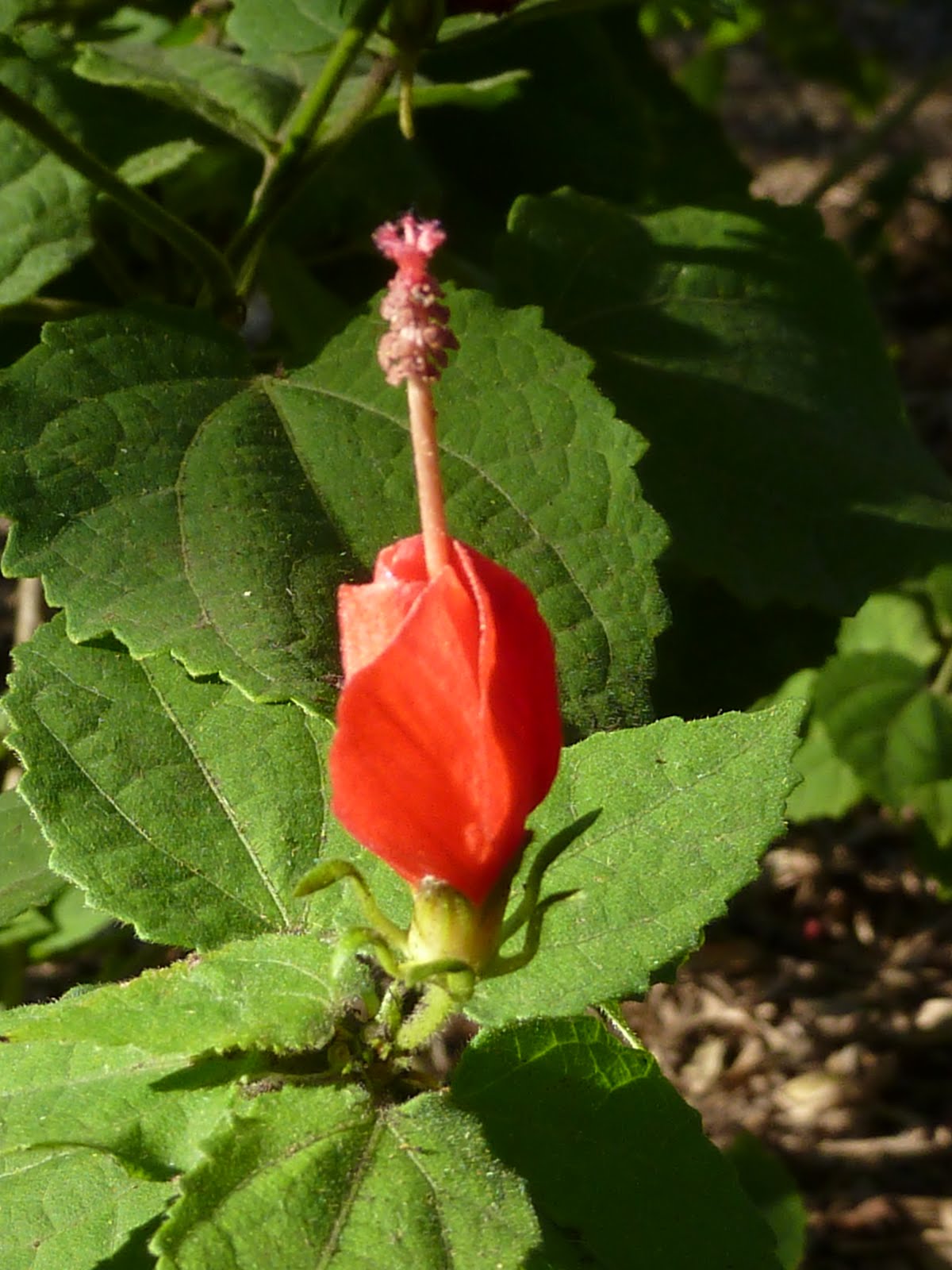
A couple of flower close-ups:


A fountain containing various aquatic plants. The fountain wasn't actually working, so it was just a pond. In the background you can see one of the abandoned buildings. It used to be a meteorological station and planetarium, apparently...

I had never seen an actual pomegranate tree before seeing this one. It was surprisingly frail despite producing such heavy fruit.

Ubiquitous in Lisbon's parks are these birds. They're roughly robin-sized, and tend to run along the ground in the same way robins do. They also seem to hate holding still, so I managed to get this bird as it was getting a drink of water from the fountain pond.

The garden sits on a hill, and it has distinctive areas. A more formal, landscaped area at the top (where the previous photos have all been taken) and a wilder area with large, shady trees below, running down the hill. The only way between areas is this stairway/path.

Looking up from that walkway towards the tops of the large palm trees looming overhead:

From huge to miniscule - on a large palm leaf I spotted this tiny insect. I include it because I'm just impressed with myself that I managed to capture a quality image of such a tiny thing. Although, it is actually pretty cool looking.

There is a little plot devoted to plants from arid climates, which contained the following two flowers. This first one reminds me of shooting stars.


More flowers from the wooded section, a giant fungus, plus the bamboo tunnel.


Finally, my biggest personal triumph of this visit. There were several birds in the garden that resembled flickers. They were crow-sized, light brown, and pretty drab except for their wings. When they flew, their wings revealed a black and white pattern with a flash of iridescent blue. They also made a lot of chattering noise. They were extremely skittish, however, and wouldn't let people get anywhere near them. I managed a few photos that turned out half-decent (and a lot of worthless blurs). When we went back to the garden a second time about a month or so later, there was no evidence of these birds. So I don't know if they were just hiding (it was more crowded when we came back) or if they were migrating. Anyway, this photo is the best one I got, and as I said, I'm proud of myself for managing to get such a good shot where the bird is clearly visible.

There isn't a very good official page for the garden, so here's a link to what exists in that regard, plus a blurb from the World Monuments Fund about the garden.

Official Page

World Monuments Fund blurb

Mar 7, 2012

Rossio

Here are some photos, in no particular order, from the Rossio, an area just north of the Baixa.

An accordionist serenading diners sitting outside at a cafe, along the Praça Dom Pedro IV (the larger of the two Rossio plazas).

In the middle of that square resides this statue, of Dom Pedro IV. In the background is Lison's most famous theater, Teatro Nacional Dona Maria II. This is looking north.

I think I might have posted this already, (in the Elevador de Santa Justa post) but here is one of the statues at the south end of the aforementioned plaza. There is an identical one at the north end.

This really interesting building is the front of Estação Central, one if Lisbon's train stations, and the only one located right in the middle of the city. It's commonly known as "Rossio", and the name extends to the immediate neighborhood around the station as well. (It is also home to one of the few Starbucks in Lisbon)

Here's more detail of the entry doors.


Scrolling up from the entry:


Oh yeah, the view from the station - what you see right when you walk outside of it? Surprise! It's the ubiquitous Castelo São Jorge:

North from Rossio Station is the Praça dos Restauradores. No, that doesn't mean "Restaurant Plaza"; rather it refers to the nobles who "restored" the Portuguese monarchy after a period of Spanish domination.

Finally, a chestnut roaster. Roasted chestnuts are very popular here, and are sold by the dozen from these carts located on every busy sidewalk. However, they are considered a winter-time only treat. Even now, at the beginning of March, they're pretty much gone.

Mar 4, 2012

Lisbon by night/Lisboa à noite

Here's some pictures I took of various sights at night. I've posted pretty much all of these in more or less the same locations at daytime, but it's always nice to see a different perspective.

Here's the parliament building at night, looking west down Travessa da Peixeira.

This is Castelo de São Jorge from the Miradouro São Pedro de Alcântara.

Here's a shot encompassing the Castelo, Alfama, Rossio, and Baixa, from the same viewpoint.

On New Year's Eve, we went down to the Praça do Comercio in the Baixa. It was fun, but it wasn't until afterwards that we found out the city's main festivities had been relocated at the last minute to the Parque das Naçoes. Oh well. Here's a few shots from that night.

This is looking down Rua Augusta (a large pedestrian-only thoroughfare) towards the Praça. That glowing red thing in the middle of the street was an art installation which was only there for a few days.

And here's the same view looking the opposite direction, north down Rua Augusta from the Praça.

In case you're curious, here's a close up of the top of the arch:

And looking up from underneath:

With the river behind me, here's a view encompassing the Praça, with the Castelo in the background.